What Makes a Wool Blanket Worth the Price — and How to Tell the Difference
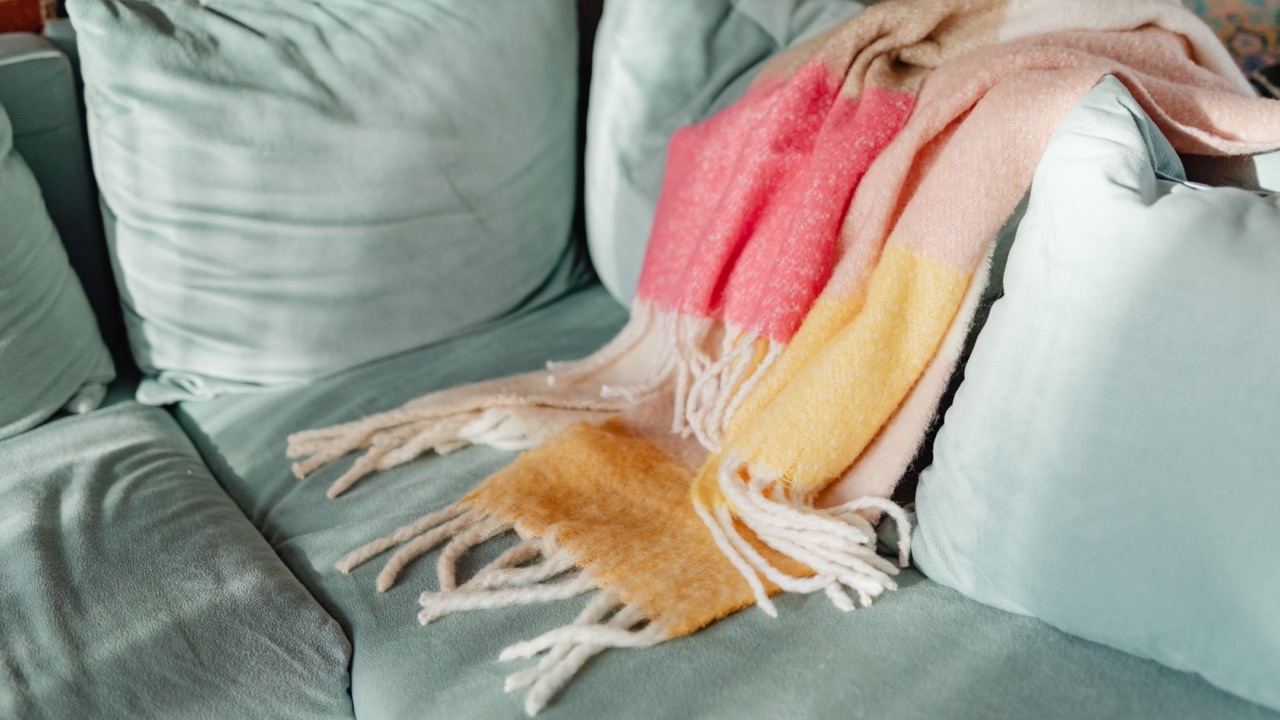
There’s a wide range of blankets sold as “wool,” and the price range reflects a genuine difference in quality rather than just branding. A $30 blanket from a big-box store and a $300 blanket from a specialist maker can both be labeled wool, but they’re made from different fibers, processed differently, and will feel and perform very differently over time. Knowing what to look for makes it easier to understand what you’re paying for — and whether the premium is justified.
Start with the fiber: not all wool is the same
The term “wool” covers a broad category of animal fibers, and the specific source matters. The main distinctions:
Merino wool is the most widely discussed premium option. It comes from Merino sheep, primarily from Australia and New Zealand, and is notable for its fineness — measured in microns. Fiber under 18.5 microns is typically described as ultra-fine and is soft enough to wear against the skin without irritation. Merino wool also has natural temperature-regulating properties and handles moisture better than synthetic alternatives.
Standard wool (from non-Merino breeds) is coarser — typically 25–35 microns — which means it’s warmer and more durable but can feel scratchy against sensitive skin. This isn’t necessarily a problem for a blanket you’re using over clothing or bedding, but it matters if you want the blanket to be comfortable as direct contact.
Lambswool is taken from the first shearing of a young sheep and is finer and softer than standard adult wool from the same breed. A lambswool blanket from a non-Merino sheep can feel better than standard wool, though usually not as fine as Merino.
Alpaca is often grouped with wool but is technically a separate fiber. It’s naturally hypoallergenic, warmer by weight than sheep’s wool, and doesn’t contain lanolin. Alpaca blankets tend to be lighter than equivalent sheep’s wool blankets with similar warmth.
Any listing that says “wool” without specifying the source is worth questioning. The absence of specifics usually means standard wool — which isn’t bad, but isn’t the same as Merino.
Weight and weave: what determines warmth and durability
The weight of a blanket — measured in grams per square meter (GSM) or sometimes stated as total blanket weight — tells you how densely it’s made. A 400 GSM blanket is noticeably warmer and heavier than a 200 GSM blanket of the same size. For a throw blanket used on a couch, 250–350 GSM is usually comfortable across a range of temperatures. For a bed blanket used as the primary cover in a cold room, 400+ GSM is more appropriate.
The weave structure affects both feel and longevity. A tighter weave is more durable and pills less over time. A loose, open weave gives a softer, drapier feel but is more susceptible to snagging and to pilling with use. Herringbone, twill, and tight plain weaves all tend to last longer than loose knit constructions.
One practical test: hold the blanket up to a light source. A quality wool blanket with a tight weave should be relatively opaque — you shouldn’t be able to see through it clearly. If you can, the weave is either very loose or the GSM is low.
The finish: how the fiber is processed
After weaving, wool blankets can be finished in several ways. Milling (or fulling) involves washing and agitating the wool to tighten the fibers and create a denser, slightly felted surface. A milled blanket has a soft, almost velvety surface texture and is more resistant to water than an unmilled equivalent. Traditional Welsh and British mill blankets are typically milled; Scandinavian and many Nordic-style blankets often are not.
Brushing raises the surface fibers to create a softer, fluffier texture. Brushed wool feels immediately soft but can pill more over time than an unbrushed finish, because the raised fibers catch on surfaces more easily.
High-quality finishing is usually invisible in the sense that you can’t see the process, but you feel it in the evenness of the surface texture and in how the blanket handles washing. A well-finished blanket comes out of a gentle machine wash or hand wash without significant shrinkage or distortion; a poorly finished one can felt unevenly or lose its shape.
Construction details: where quality shows
Edges and binding are often where the difference between a $40 blanket and a premium one becomes physically obvious. Look at the edge finishing: is it a clean, even overlock stitch, or is it a folded and sewn binding? Are the corners mitered (folded at 45 degrees for a flat, neat corner) or just folded over roughly? On high end wool blankets, the edge finishing is usually sewn with a matching or complementary color thread at consistent spacing, and the binding lies flat without bubbling or pulling.
Fringe, when present, should be an extension of the warp threads of the weave itself — not sewn on separately. A sewn-on fringe is a cheaper manufacturing shortcut and tends to detach with use. Integral fringe is more durable because it’s structurally continuous with the blanket.
Provenance and transparency
Heritage wool producers — particularly those with generations of manufacturing history in Scotland, Wales, Ireland, Iceland, or the American Southwest — tend to be transparent about their fiber sourcing and processing. When a manufacturer names the specific sheep breed, the mill, or the regional wool standard (Woolmark certification, for example), that transparency is itself an indicator of quality, because there’s a verifiable claim behind it.
Generic “wool blend” products sourced from undisclosed locations have no such accountability. A blend that’s 30% wool and 70% acrylic is technically a wool product but performs and feels much closer to synthetic than to a 100% wool blanket.
What the price actually buys
At the entry level, you’re getting basic wool warmth in a functional form. At the premium level, you’re getting a combination of factors that compound: finer fiber, more precise weave, better finishing, better construction details, and usually a longer lifespan. A blanket that costs three times as much but lasts ten times as long is the better value even before accounting for the difference in daily experience.
The test that holds up: feel the surface, look at the edges, check the weight, ask about the fiber. A blanket that can answer all of those questions specifically is more likely to be worth its price than one that can’t.